Posts

Showing posts with the label Diane Ackerman

the senses & love

Image
"It is both our panic and our privilege to be mortal and sense-full." - Diane Ackerman      Can you love without any senses? I suppose we'll never know, because we, as humans and animals, have never done so. For as long as I've been alive, love has always been at the forefront of my brain: the concept of it, the science behind it, its many forms, etc. This often results in a lot of effort put into my interpersonal relationships; in something like a ritual, I write down little notes about all my friends, my mother and father, about the things they like or don't like, their favorite foods or scents or things to be called. For this blog post, I'm going to endeavor to relate each of the five senses that we covered in Diane Ackerman's A Natural History of the Senses to love. p.s. linked above is a beautiful video from 14 years ago featuring beautiful lesbians dancing :) Smell:      This one seems fairly obvious with all the Ackerman talk about pherom...

Smelling Smells

Image
Smelling Smells My Most Influential Sense  Out of all of the senses, I would say that my smell sense has the most influence. As mentioned in "A Natural History of Senses" by Diane Ackerman, olfactory is connected to our memories. When picking through my memories and trying to find the memory I'm looking for, its much easier to do if I smell something I associated with it, than have someone tell me about the memory verbally. Post my traumatic brain injury in 2013, smell has always been the best way for me to connect to the memories I don't consciously remember.  I have an oil diffuser in my dorm room, as i'm sure some of you also do. I have three oils that I rotate using to make my room smell good: orange citrus, eucalyptus, and "ocean breeze". Ocean Breeze is my favorite because rather than smelling like the salty air I associate with the ocean, it smells like clean, fresh out of the dryer laundry. I was disappointed at first, but grew to love...

Of Perfume and Memory

Image
As a kid, I loved the smell of perfumes, but I never had any myself. In elementary school I hated "girly things" such as the color pink, perfume, concerns about my hair or appearance, but as I grew older I began to embrace the change that comes with being an adult. I don't know much about perfumes, and I'm sure there's science about it I could learn, but I usually go off of how pleasant the smell is to me, which I don't think is based on statistics.   "Eros Perfume Bottle" Last semester I went to Syracuse, New York to visit some friends, and we went to the mall where I picked out my first perfume. If I had to describe it, I would call it complex, mature, something that doesn't quite fit my image but I'm okay with that. In A Natural History of the Senses by Diane Ackerman, she meets with a perfumer who talks about the mechanics of making a successful scent to then sell to the public. As a kid I didn't know what the big deal was; I ...

Sensational Sensations

Image
A Review of Diane Ackerman's "A Natural History of the Senses" Vietnam Famous Destinations While I have many problems with the language that is used in Ackerman's book, I have found myself coming to appreciate the message that is presented in the book. Throughout the reading, I have found myself thinking more about the incredible features that my own body possesses. While the overall material of Ackerman's work can be summed up in the three words, "horny old lady", she has a very intriguing way of capturing the reader's eye by adding in memories from her life to create more of a narrative to the book. Her romanticized writing style can either disgust you or lure you in further. Out of everything said in the book, what stuck out to me the most was the way in which she describes relationships with babies and their mothers. Diane writes how people in other cultures primarily those in less developed nations people carry their babies against the...
Image
In Diane Ackerman’s book A Natural History of the Senses, she begins the chapter by giving examples of smells that elicit memories from one’s past. While I believe that all the senses are capable of triggering nostalgia, for me at least, smell is the most potent when it triggers memories because smells are usually sprung onto us by surprise. Sometimes we go into our attics and look at old photos, or cook ourselves a dish that reminds us of our past. However, those are conscious, deliberate efforts to bring us back. Smells are different. They sneak up on us; they are completely unexpected. Perhaps a woman on the subway is wearing the same perfume as your grandma. Or maybe you’re walking past a bakery and the smells that waft out transport you back to a European vacation you took years ago.  For me, countries have very specific smells that conjure up memories from my past. It’s comforting. In Seoul, you are bombarded with smells of street foods such as roasted chestnuts, popco...

The Appeal of Hallucinogens

Image
From https://www.theodysseyonline.com/synesthesia-hear-colors The desire to alter perception and consciousness is not unique to humans. Cats feast on catnip until they get loopy and birds get tipsy off fermenting berries. As we learned from our guest speaker, many animals are just as prone to addiction as humans are. Alcohol, cocaine, opiates, nicotine, and many other mind-altering substances have the same appeal to animals as they do to humans. However, we also learned from our guest speaker that there is one important exception: hallucinogens. In a lab, a rat that is given a hallucinogen will not return to it the same way it would with most other drugs that humans use recreationally. One explanation is that these drugs are simply not addictive and so the animals sees no point in pursuing it. But this does nothing to explain why humans actively seek out hallucinogens, and why we are the only species that appears to want to use them over and over again. Why does the same subs...

The body and writing

Image
I was intrigued by Diane Ackerman's depictions of artists, and especially writers, in her chapter Courting the Muse , plunging their synaptic buckets deep into their word wells with the help of the outside world. Describing the search for inspiration through our senses  was a terrific way to tie up the book, since this quest pushes us to discover the limits and subtleties of all our senses. I was a little confused why she included a few lines, like the Edith Sitwell bit about how she'd chill in a coffin before writing. While Edith absolutely looks like somebody who would emerge from a coffin to write poetry, was it the touch of the padding inside that she craved? Is there a fresh coffin smell? Or perhaps, she was reaching out into the void- towards the unknown, a sixth sensation? Was there ever a dead body in it? Coffins are more of a mood, to me at least, than sensual experiences. They have too much emotional and cultural baggage.  I haven't been in a coffin though, so ...

Obscurity, & The Fourth Colour

Image
Arkangel , an episode of "Black Mirror" Obscurity In the vision section, Diane discusses how humans may intentionally or unintentionally obscure certain things from their vision. The human eye is adept at focusing on specific things in its field of vision, however it must blur something else to achieve this focus. She writes "Because the eye loves novelty and can get used to almost any scene, even one of horror, much of life can drift into the vague background of our attention" (pg 235). This sentiment intermediately brought to mind an episode of the SciFi horror show "Black Mirror", Arkangel . In this episode, a loving ("hovercraft") mother, concerned with the safety of her child, has a device installed in the young girl's brain. Using the device, the mother is able to see everything her daughter sees, broadcast to a tablet (another black mirror). Additionally, the device includes a filter. When it detects a cortisone spike in t...

Touching Moments

Image
"Language is steeped in metaphors of touch... call our emotions feelings, we care most deeply when something 'touches' us. Problems can be thorny, sticky... [there are] touchy people... get on our nerves" (70) Longing Hands touching  Touch is something most of us take for granted - most of us can touch, or in Ackerman's interpretation of touch above, have the ability to be touched in some way. Upon reading Ackerman's explanation of the relationship between touch and language - through the way people talk or act we get 'feelings' about them. Touch is intertwined in everything we do - in either an emotional or physical context. There is a small number of people, in fact, who were born with the inability to feel physical touch - both positive and negative. This is called anhidrosis . Analyzing what it means to not feel touch, gives an insight into what it's like to feel . Yes, from a typical perspective of a person who can touch, being able...

Smellementary Capabilities

Image
“it is both our panic and our privilege to be mortal and sense-full. We live on the leash of our senses" (xvii)  Roses in the water to reference Ackerman's section on the smell of roses.  Our sensations have been intrinsic in our human survival and experience and have probably changed and evolved over time. What once was integral for survival and the continuation of the species is now what shapes our human experience. According to Ackerman, our senses both limit and restrain us in our interpretations and understandings of the world in a way that isn't cerebral. Looking at animals and analyzing their senses gives us an idea of what our senses could have been. What’s the importance of the interplay between animalistic senses and our own and how much can we learn from them? Some things, in my opinion can be learned, but it must be noted that animals and humans (both actually animals) evolved and adapted in different ways that ultimately best suited them fo...
Image
“We are enjoying the planet’s war machine” (55) I love how Ackerman juxtaposes the ways in which we use and enjoy smell against the biological, evolutionary, reasons that those smells exist. Flowers are trying to attract pollinators and animals are trying to attract a mate or mark their territory. And in our infinite wisdom and power we harvest and use those smells to perfume our bodies and homes. It makes me think of all the other things that have come about as adaptive, evolutionary, traits that we use in different ways now. It relates, at least in part, to taste too. I think (though I am not a biologist) that much of our tastes may have been developed as tools to help guide us in knowing what to eat and what not to eat. Poisonous foods taste bad and nutritious foods taste fresh and palatable. But as time went on, we developed more sophisticated pallets and ways of cooking and could grow the right kinds of mold and fungi to eat. We’ve taken the different tastes from the natural worl...

Describing a smell

Since reading the chapter on smell at the beginning of the week, I've kept thinking back to one of Ackerman's points: we don't have a language for smell. Not nearly as much as we do for our other senses. If I were to ask you to describe your bedroom for example, you would probably start by describing the layout of it, where your bed is, your desk, any posters on the wall. If I asked you about your favorite song and to describe how it sounds, you might start singing or humming it so that I can experience the sound for myself. So if I were to ask you to describe the smell of your parent's house, how would you describe it? For myself, home doesn't have a specific smell, home smells like home. And yet, I go to someone else's home and it has a very distinctive smell. There was a recent study done by the University of British Columbia  in which woman were given clothes to smell that either hadn't been worn, been worn by a stranger, or were worn by their romant...

Senses and Shoe Shining

Image
In the chapter on touch, Diane Ackerman suggests that shoe shining is one of humanity's "frequent emporiums of touch". That actually really bothered me. Now, I'm not a millionaire, and I don't live in the nineteenth century, so I've never been drawn to have my shoes shined. But I've walked by shoe shiners, seen them longingly stare at the scuffed shoes of passerby in  the Boston and Providence train stations. http://www.asiatraveltips.com/newspics/0610/HongKongAirportShoeShine.jpg Now, I agree, it is a fact that a shoe shiner must touch the shoes of the shoe shinee to perform their duty, but to cite shoe shining as if touch was the most important sense involved- that's just ignoring what shoe shining is all about. Do you get your shoes shined because you enjoy feeling your shoes? Or because you want them to look better? There is a factor of preventing wear and tear, but a shoe shining is not a foot massage. The only touching involved is indirec...

The Most Intimate Sense

Image
“You can’t pick out a fragrance for someone else.” That was what my mom told me in high school. It seemed to me that perfume was something all the grown-up women in my life used, so I figured it was time for me to get in on the action. I asked her if she would get me some perfume for my birthday and she refused. She told me that everyone has to pick their own fragrance. Perfume is generally a gift only received from a romantic partner because it is so intimate. Even then, a scent picked for you by someone else may never feel quite right because our scent is tied to our personality.  http://stylecaster.com/beauty/perfume-for-your-personality/ Scent is an incredibly intimate, personal sense. It starts with the simple nature of how it works; to smell someone, you must be close enough for their particles to reach your nose. There are very few people in one’s life that spend enough time in this close proximity to actually know someone else’s’ scent. We know the smells of lovers and ...

Class Outside of Class

Image
We all have times when we don't feel like ourselves. I think a lot of seniors are feeling this way right now- anxious, confused, stressed, emotional- the list goes on. Yesterday I woke up feeling strange, almost disconnected from my surroundings. In this weird transitory time, I wasn't surprised, but I was unsure of how to shake this feeling and come back into my body. At lunch, my roommate and I grabbed one of the desserts from the dining hall because it looked appealing. However, upon smelling it and savoring its taste, we came to the conclusion that (like many foods here) it did not taste at all like what it was meant to be. That's when it hit me- focusing on the sensory experience of trying a bite of the dessert brought me back into my body. My mind came down from the cloud that it was on and I felt more in tune with myself. I knew what to do from there. Some people use religion as their primary means of reconnecting with themselves, while at the same time experiencin...

The Psychology of Color

Image
Diane Ackerman discusses the trees changing color and why we see this as a part of her analysis of vision in The Natural History of the Senses , and this section of the book really captured my interest, as I have always found color to be extremely intriguing. I had a childhood friend who was red green colorblind, and I could not wrap my head around his inability to distinguish between these two colors that seemed so different to me. In my mind, if I could see them, how could he not? Since then, I have realized that in fact our individual perceptions of the world can differ wildly, but as a child, it seemed so unlikely that my friend and I could see the world so differently. In class on Tuesday, we discussed color and the mechanism of how we see it. Essentially, we see whatever color an object is not, whichever color is reflected back instead of absorbed. We also briefly touched on the association between colors and emotions, which prompted me to think on this further. For example, ...

Sounds and Hearing Them

Image
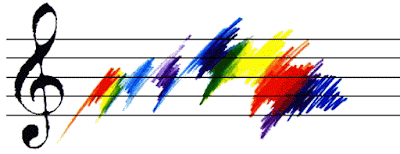
         There were two quotes that really resonated with me from Ackerman's section of sound and hearing. Both of them were about how children and mothers are connected by sound. The first being "Mother and child are connected by an umbilical cord of sound." This really resonated with me because when I was growing  I would really like a song my parents played. They would attribute it to the fact that they played the song for me through headphones while my mother was pregnant. Not only were my first experiences of this world defined by my mothers quiet swish of her blood circulating and the steady drum of her heart; but also included musical selections from Incubus, pink Floyd, Dave Mathews band and the like. I obviously don't remember what being in the womb sounded like but I often think about what it must have been like. I imagine it to sound like an ocean tide crashing against the shore in strong rhythmic beats.           ...

The Shape of Sound

Image
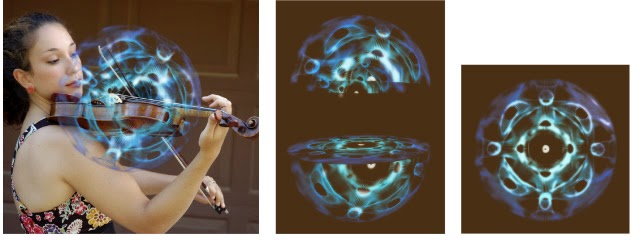
In Diane Ackerman's description of sound she says that sound is air molecules that move in waves that begin with the movement of any object. These waves enter the outer ear which is like a funnel and vibrates the eardrum, the hammer, anvil and stirrup bones (the tiniest bones in the human body) which press fluid in the inner ear triggering the cochlea hairs which signal nerves. However, there is one misconception present very early on in this explanation. Sound does not simply travel in waves . Instead sound travels in spheres . Scientist John Stewart Reid was the first to officially introduce this new understanding of sound. Here is an excerpt from his writing on the subject: " Sound in air is the transfer of periodic movements between adjacent colliding atoms or molecules. This sonic energy typically expands away from the site of the collisions as a spherical or bubble-shaped emanation, the surface of which is in a state of radial oscillation. The sonic bubble expands ...

Aphrodisiacs: Food and Sex

Image
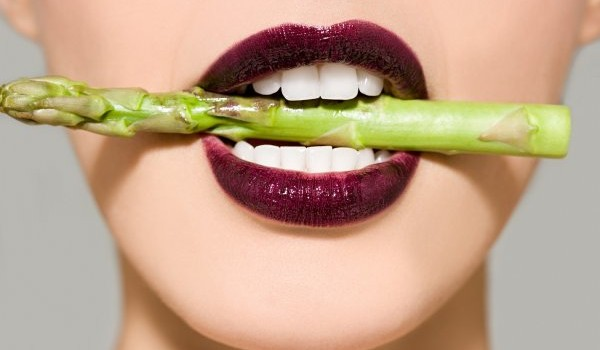
As Valentine's Day is approaching, our attention turns to the sensual side of our senses. Ackerman states on page 130, “Sexual hunger and physical hunger have always been allies.” Restaurants are currently preparing their menus full of foods to be served called aphrodisiacs. Newspapers and magazines are publishing articles about what to whip up for your loved one in the kitchen this February 14th with tips on using aphrodisiacs to set the mood. Foods like oysters, champagne, asparagus, strawberries, cherries, blueberries, bananas, avocados, blowfish, eels, cucumber, tomatoes, honey, coffee, cinnamon, chilies, ginger, garlic, figs, caviar, chocolate, and the list goes on. Aphrodisiacs have been used throughout history from Elizabethan brothels offering prunes to Marquis de Sade lacing his bon bons with spanish fly that he served to his friends and prostitutes, reported by Ackerman on page 131. But what makes these rumored foods so sexual and what exactly are they doing to our...
Image
Every human begins his or her life immersed in the sound of his or her mother’s heart beat. Diane Ackerman describes in great detail, the significance of this experience, in her chapter on hearing. Iambic pentameter (mostly found in poetry) mirrors the heart beat and therefore can give a third dimensionality to the words, which have already been so artfully constructed. The familiar beat gives us the feeling of comfort and ease, which allows the words to seep through us and make the experience of a poem more pleasurable. It seems clear to me, that our initial nine-month encounter with the world, living inside of a constant rhythm, bestowed a love within each of us, for all many forms of rhythm.   We see it in the music we listen to every day, regardless of the genre, its hard to find music without a rhythm.   We can find rhythm incorporated in chanting, singing, praying and dancing, performed by people in completely different cultures with totally different sounds all ove...