Posts

Showing posts with the label #ackerman

Anaphrodiasiacs?

Image
  I accompany my Chase Dining Hall meals with a TV show (Hulu, because Netflix has caught onto the fact that I’m not in my hometown any more) and recently it’s been The Great — a dramatized and sillified adaptation of the life of Catherine the Great, because I have developed an addiction to powered wigs and panniers— and in it is a scene where she is attempting to seduce a prospective conspirer. Beforehand, her maid gives her the advice to “eat the oysters. They’ll help your mood.” Of course, the man picks up none of her signals, and the oysters are spoiled. So, because in Natural History of the Senses Ackerman pays so much attention to sexy food, I want to try to explore unsexy food, inspired by the Empress of Russia puking oysters. Apologies for the ridiculousness.  Some of Ackerman’s reasoning is all to do with the earthiness of food. “Food is created by the sex of plants or of animals; and we find it sexy. When we eat an apple or peach, we are eating the fruit’s placenta”...

Hyperfixation; How Focusing on One Sense Can Calm the Others

Image
  Hyperfixation; How Focusing on One Sense Can Calm the Others      As human's it seems both completely reasonable and normal to crave a calm mind state, or rather a neutral one. We strive to calm our senses, and remain "ration". At least, that's how I see it. To me being calm, or at least at ease, is what I strive for as a base emotion on a day to day experience. As a person with anxiety it's not necessarily an easily achievable thing, but with the help of both personal strategies and outsiders, I tend to be able to control my worries most of the time. When I don't I find it best to resort as what is commonly know as a state of hyperfixation. For me, that looks like sitting in a plain environment, closing my eyes and listening to music but it can look many ways for many people.        States of ease can be achieved in many ways. Ackerman sites the idea of scent as something both calming and accessible, " Hanging from my bathtub’s shower att...

The Capabilities of our Minds: Touch, the Natural History of the Senses

Image
Touch: The Capabilities of our Mind  By Ava Barry As a society, we joke about touch all the time. We say to our cranky friend, “You must be touch-deprived”, but what does that mean? Being touch-deprived sounds like a horrible life! Touch is essential to our happiness. If you are reading this, as a touch-deprived folk, thinking oh you are being overdramatic, it isn’t that bad - I am going to stop you there. It is that bad. In Daniel Ackerman’s book, The Natural History of the Senses, she explains a study of touch conducted on monkeys. In this study, they found that “a relatively small amount of touch deprivation alone caused brain damage, which was often displayed in the monkeys [test subject] as aberrant behavior”. Lack of touch can be detrimental to us, even if we are unaware of it . Touch us something that changes your whole mood, for it makes people feel happier.  If you are still not buying it, just think of how great you feel after a long hug from a l...

The song of human sensory experience

There are a number of things that Diane Ackerman writes about in this chapter that I find interesting, but there was one quote in particular that reframed my entire perspective on the sense of smell:  “Breaths come in pairs, except at two times in our lives—the beginning and the end. At birth, we inhale for the first time; at death, we exhale for the last. In between, through all the lather of one’s life, each breath passes air over our olfactory sites. Each day, we breathe about 23,040 times and move around 438 cubic feet of air. It takes us about five seconds to breathe—two seconds to inhale and three seconds to exhale—and, in that time, molecules of odor flood through our systems. Inhaling and exhaling, we smell odors. Smells coat us, swirl around us, enter our bodies, emanate from us. We live in a constant wash of them.”  At first this came across to me as a dramatic, romanticized characterization of what I considered to be a usually fairly mundane sensorial experience. I’...

The Power of Scent

Image
As an English major, one would expect me to be used to Freud by now. Even after all these years of Freudian readings, it is still daunting to see his sex obsession here, in the pages of Diane Ackerman’s book. As she discusses scent, it is nearly impossible for her to sever it from sex. Every other page seems to forge a new link between the two. Scent helps us to identify our ideal mates. The names of strong-smelling animals are nicknames for sex workers, or, vice-versa, nicknames for sex workers are given to strong-smelling animals. A perfumer fantasizes about creating a perfume that would make a woman entirely irresistible to men, suggesting that scent, particularly towards potential sexual partners, has truly frightening levels of control over the human mind. None of these things can be totally denied. People often wear perfume in order to heighten their sex appeal. it still has an isolating effect. As an asexual person, I can’t draw those same connections in my own mind. I can’t nec...

When Pigs Fly and Rosemary Focaccia

Image
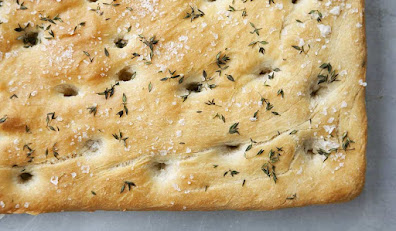
  When I watch the Great British Bake Off/Baking Show (which, admittedly isn't that often, but when such an occasion occurs, for example, when my housemates or friends watch it) I can practically sniff the ingredients through the screen. I've always been good at picking apart ingredients just through my nose, though no one should ever dare test me on that. When I walk into a Subway or any deli, I melt. No, it's not the roast beef or meatballs, it's the smell of Italian Herb & Cheese bread. Italian seasoning, with its oregano, basil and thyme; they're all very distinct scents that have always stood out to me, along with baked bread in general, which leads to no surprise that one of my favorite places to exist in is When Pigs Fly. There are so many loaves of bread. So many oils and jams. I could pick apart the herbs in a focaccia, and one particular scent that I can always identify is rosemary. I have at least two people that can fact-check me on this, that have b...

The Complexities of Sound

Image
     Sound and hearing are interesting to me because I feel like I have a love/hate relationship with them. Some sounds, like my favorite music genres and nature sounds, I love and enjoy listening to. Other times, and with other sounds, I really dislike hearing them and/or feel overwhelmed by them. For me, sound is the sense that I most associate with the extremes of feeling incredibly understood/calmed by music and feeling uncomfortable/overwhelmed by sounds that are unpleasant (at least to me). I physically cringe when I think about nails scratching a chalkboard or the sensation of cotton squeaking between my fingers. Yet, I’ve always loved music. I played the cello all throughout school, loved performing in musicals, and still sing along to my favorite songs on car rides by myself. After reading Ackerman’s chapter on hearing, I still wonder: why are some sounds so joyous and others so detestable?      A particularly intense case of certain sounds causing...

The Limitations Of Our Senses

Image
      Immediately upon reading this chapter the first thing that shocked me was the common belief that people with synesthesia are "primitive". While I understand this description in an evolutionary sense, I don't agree with labeling it as "primitive". To be able to see color in things that don't have color such as letters and music is something that many dream of, people will even go as far as to take drugs to achieve this (much like those who took LSD and watched fantasia). Of course synesthesia has its downsides, being constantly overloaded with senses must be overwhelming.      Which segues into my next point I wanted to make regarding the authors comments in the postscript. One particular quote that Ackerman wrote that caught my attention was " Ecstasy means being flung out of your usual self, but that  is  still to feel a commotion inside". It made me realize that the same could be said for any drug theoretically, everyone takes drugs in ...

Ackerman's Synesthesia: the Writer's Habits

Image
Photo  from Flickr by Jonathan Kim. CC 2.0 General Throughout high school, I was a part of a program for girls in creative writing in LA called WriteGirl. I am still a member of WriteGirl because once you start you never really want to stop. They were, and still are, such a good influence on my life and the lives of hundred other girls with big aspirations to become authors, poets, journalists, and countless other things.  In the spring of 2020, I got matched with a weekly mentor. Rory and I would meet every week for a year straight, and we still try to meet up once in a while to keep writing. When Ackerman started describing the odd little habits writers had before they got any work done, I started to think back on my own habits with Rory. Some writers listen to one song until the piece is done, yes. Rory and I use songs as writing prompts for ten or fifteen-minute writing sessions. Sometimes, we'll use a specific lyric as a jumping-off point for our pieces, or we'd simply us...

Smell, Murder, and Bodies

Image
Smell is vital to who we are, and how we experience the world around us. Nothing makes me feel warmth like the smell of a loved one, the familiarity of the smell of my bed (especially when I've been away from it for so long, and I crave its comfort), and the quick wave of scent we catch passing by a bakery triggering a memory from our childhood home.  In High School, my class read Perfume during English class, a book mentioned in Ackerman's chapter on smell as well. The story was captivating, and at the same time, confusing- how could smell have so much power, eno ugh to trigger murder and, well even orgies?? But smell is in fact, wildly powerful. It is so intertwined with taste, with memory, and with passion- it is a marker of identity, we all have a unique smell and we choose unique smells to decorate ourse lves with. We fall in love with the smell of the people we love- we can chalk it down to pheromones, or we can chalk it down to passion. We smell with our nose, but it tru...

Bugs: Would you try eating them?

Image
     What Ackerman refers to as “a trial or a test,” taste is an incredibly social sense. Similar to touch, we have to be physically close to things to taste them. We use expressions like “breaking bread” and “earning our daily bread” in ways beyond the literal food meanings, that is, to share with others and make a living, respectively. Building off of our conversation from last class, I noticed in this section of the book, Ackerman almost immediately dives right in to the connection between food and sex. She explains, among other things, that many foods were considered aphrodisiacs because of their resemblance to various genitalia. Personally, I’m not sure I completely buy into Ackerman’s beliefs on how everything is related back to sex. Sure, I think some of what she says is true, but I also think she might be reaching a bit too far and confirming her own feelings of her sexuality. There are so many different experiences of food, sexuality, and asexuality that I would ...

Feeling Means Staying Alive

Image
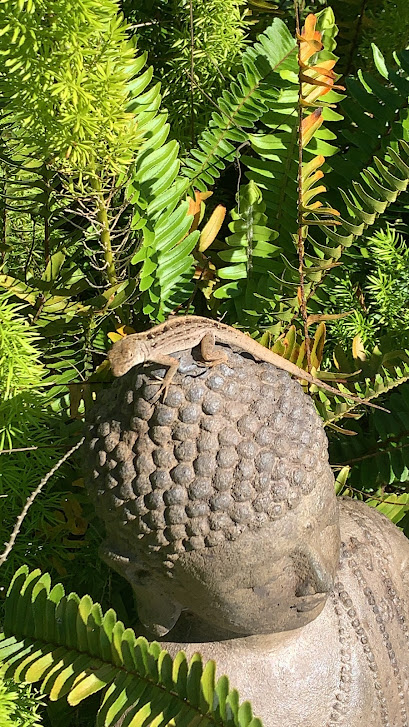
     Ackerman’s chapter about touch was quite interesting to me. One part that intrigued me was at the beginning of the chapter, when she talks about the importance of touch in the health and development of premature babies. As someone who was born prematurely, this subject seemed relevant to me. It is clear from Ackerman’s description and the research she cites that touch is vital to the health of babies in helping foster emotional regulation, better sleeping, improved development, and more.      Another section that stood out to me was Ackerman’s discussion of warm-blooded and cold-blooded animals. As warm-blooded humans, we’re able to keep our body temperature higher than our surroundings, enabling us to travel to different climates and parts of the world fairly easily. On the other hand, cold-blooded animals, like reptiles and amphibians, rely on their environments to regulate their body temperature. Most of these creatures can’t migrate very far becau...

THE POWER OF SOUND: The way music moves us emotionally and physically

       Just like all of our other senes, hearing is an important part of our everyday lives. From the moment we wake up to the moment we sleep, we are constantly listening and taking in the sounds around us. Not only is it important to note how sound plays a part in our lives but also how the absence of sound can have an impact on us.  Sound is a huge part of our lives. It's how we learn in class, it's how we connect, it plays a role in almost every aspect of our day.       Now let's move into something more specific to sound, music. Music is so important, at least in my opinion, it can shape how I feel how I move, it's powerful. Music connects us in so many ways whether thats around a campfire, at a concert, or in the comfort of your own home music seems to play an important role in how we connect with others. I think I see this most when the first question I ask upon meeting someone is, "what kind of music do you like"? Which I would then p...

Touch - Hugs Save Lives

Image
I feel like touch is one of the more interesting senses because I think I am consciously aware of it the least.  We are constantly aware of sight and sounds as we go about our days. Taste and scent are something we experience and enjoy during daily meals or snacks. I think I am most aware of those senses, but when it comes to touch, I don't think about it as much. For example, I am currently sitting in Emerson dining hall listening to the voices as they get louder and more annoying. I see my computer screen and I’m thinking about the harmful blue light from the screen on my retinas. I am tasting and smelling my breakfast and tea. However, I did not think about the feeling of the things around me until I began writing this. When I pick up the hot cup and if the liquid inside burns my mouth, I will process the pain, and for a moment the extreme awareness of the sense of touch will hit me, then subside again. When I walk outside and the cold air consumes me I am aware of it but I will...

Language Matters

Image
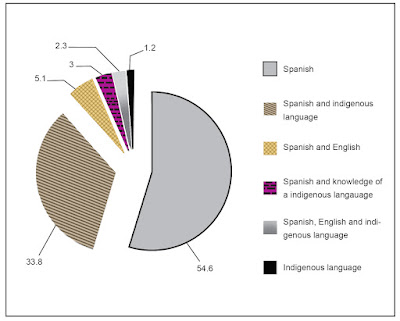
" Linguistic Diversity in Children in Indigenous Elementary Schools in Baja California (percentages) " from a study done by Laura Velasco Ortiz and Daniela Renteria from the Autonomous University of Baja California. Creative Commons license 4.0 International The beginning section of Ackerman's chapter on hearing fascinated me in ways I didn't quite expect. I love learning weird facts about the etymology of words and I also enjoy learning about the use of language across history. It's a bit strange, but fascinating nonetheless. The beginning of 'Jaguar of Sweet Laughter,' then, was quite literally the perfect intersection of those two interests.  It got me thinking about how common it is for the "conquerors" of a country to change the language, and even create a stigma around the indigenous way of speaking. Irish Gaelige was banned in Ireland by the English, as was Welsh, Scots, and other Celtic languages in order to control the indigenous populat...

Living in My Skin

Image
     Ackerman makes it apparent that our skin, the largest organ of the body, is the only part of us that makes contact with the outside world. We spend countless hours and contribute hundreds of dollars throughout our lives making our skin soft, smooth, covered with art, even pierced or stretched. It is the extension of our personalities, a way to express ourselves visually to others. For me and around 50% of the global population, the skin is covered with rough patches and small bumps particularly on the upper arms and thighs, though it can also cover the cheeks and the rear. It’s the result of a harmless skin condition called keratosis pilaris and can be considered a common variant of skin type.       It doesn’t bother me much other than the way it looks to others. The bumps are dark-ish red, mostly flush to the skin, and appear as thousands of evenly dotted circles. They’re caused by the excess production of keratin by the body, which blocks hair f...

Comforting Smells

Image
I'm not surprised that the most memorable sense is smell; there are certain scents, where as soon as I smell them, I'm taken down memory lane. A specific kind of soap immediately reminds of my pediatrician's office, and a certain cologne reminds me of warm summer days with an old friend.  While Ackerman describes smell as something constant, a sense that is stimulated every time you breathe, I've never really thought of it that way. My sense of smell is not exactly strong, so when I'm not actively smelling something, it's often like I'm not smelling anything at all. Obviously, we all go noseblind to things when we're in the same environment for a long enough period of time, but there will be times when I have to double check that I can still smell things because either I've gone noseblind to the scent of wherever I am, or the scent is so neutral that I just don't notice it. The paranoia of covid has also made this something I do pretty often.  It...

Smell - The Fear of Anosmia

After reading the first chapter of Ackerman's Natural History of the Five Senses, the thing that resonated with me the most was the section about anosmia. Today in class I spoke about how taste is my favorite scent, but after reading this, I realized that taste is not the same without scent. One of the chefs that my mother knows owns a restaurant in Providence and his food is absolutely explosive with flavor. It is some of the best food I have ever had and I cannot imagine not being able to taste it to its fullest. His is the only food that I have ever described as being explosive with flavor, no matter what it is. This section also struck a chord in me because of a young girl I babysit who has no sense of smell. It does not seem to bother her, but then again, she has never known what it is like to have a sense of smell, unlike the man Ackerman wrote about. When she grows up and eventually lives on her own she will get a service dog to detect gas leaks or smoke. This ...

How Touch is Everywhere

     The idea of touch brought up in the reading made me realize that touch plays a part in almost every aspect in our lives, which makes me wonder where would we be without it? I never thought about all the things I wouldn't be able to do if I couldn't touch things or feel them, one note that relates to this especially stuck out to me. It was when Ackerman said "but to be without touch is to move through a blurred, deadened world, in which you could lose a leg and not know it, burn your hand, without feeling, and lose track of where you stop and the featureless day begins." This quote really stood out to me because of Ackermans use of the word featureless, which made me stop and imagine a featureless day and it was scary to think about basically living in nothingness because you don't know what's going on because you can't feel.       Another thought this topic brought up for me was how everything you touch is a transfer of energy and in some religion...

Pain in Catholicism

Image
The section of Ackerman's A Natural History of the Senses on pain was fascinating. When I was growing up, there was this focus in church on something probably akin to 'holy pain.' As a kid in Catholic school, we did the Stations of the Cross. I hated doing it because the process itself was almost painful to me. It's a lot of standing, then kneeling, and we went through all twelve stations without stopping. I can't remember what the point of going through the Stations of the Cross is (probably to be fully aware of the process of Jesus' crucifixion and almost empathize with him) but I remember what it was like to sit there, kneeling before images of Jesus on the cross. The pews of my childhood church (included in the video) were never the most comfortable; during Mass as a kid, I always tried to set most of my weight on the pew itself when we had to kneel for prayer. The cushions were never adequate enough to support even the body of a seven-year-old. The pews the...