Posts

Showing posts with the label #samanthakerr

Memorable Moments

For me, some of the most memorable moments in the class were the guest speakers. I really thought they added something to the class because their own expertise added to the conversations we were already having. It didn’t necessarily feel like they were there primarily to lecture. Rather, they were joining in on the discussion, which I thought was a very valuable experience and more exciting for everyone.  I think taking this course has made me more thoughtful in my everyday life. Senses are something that I have to experience no matter what but often I overlook them in favor of thinking about the million other things I have going on. Between classwork and applying to internships, it has been hard to find the time to slow down and relax. However, this class has led me to recognize the strong emotional impact that the senses have, and I have been able to use that to my advantage to help with stress and anxiety.  

Naming Scents: The Ambiguous Nature of Describing Smell

Image
It is really difficult to name smells without just saying the thing that produces a smell. We don’t really have words for smells specifically. A floral scent is called that because it smells like flowers, “floral” is not its own word specifically for the scent. This becomes especially apparent when reading the names of candles and perfumes. For example, I own a perfume named “Velvet Moon”. That name has nothing to do with what it smells like, and yet I personally think it is aptly named. The perfume smells like cardamom, mahogany, beeswax, and black pepper. Is that what the moon or velvet smells like? Almost certainly not. But the words used to describe the scent have given me the association between those scents, velvet, and the moon. This is also true when the name of a scent doesn’t match what mid tells you something should smell like. There is a Yankee candle called “By the Pool” that is amber and coconut scented. That notably is not what pools smell like, so while the scent itself...

Rituals in Professional Kitchens

Image
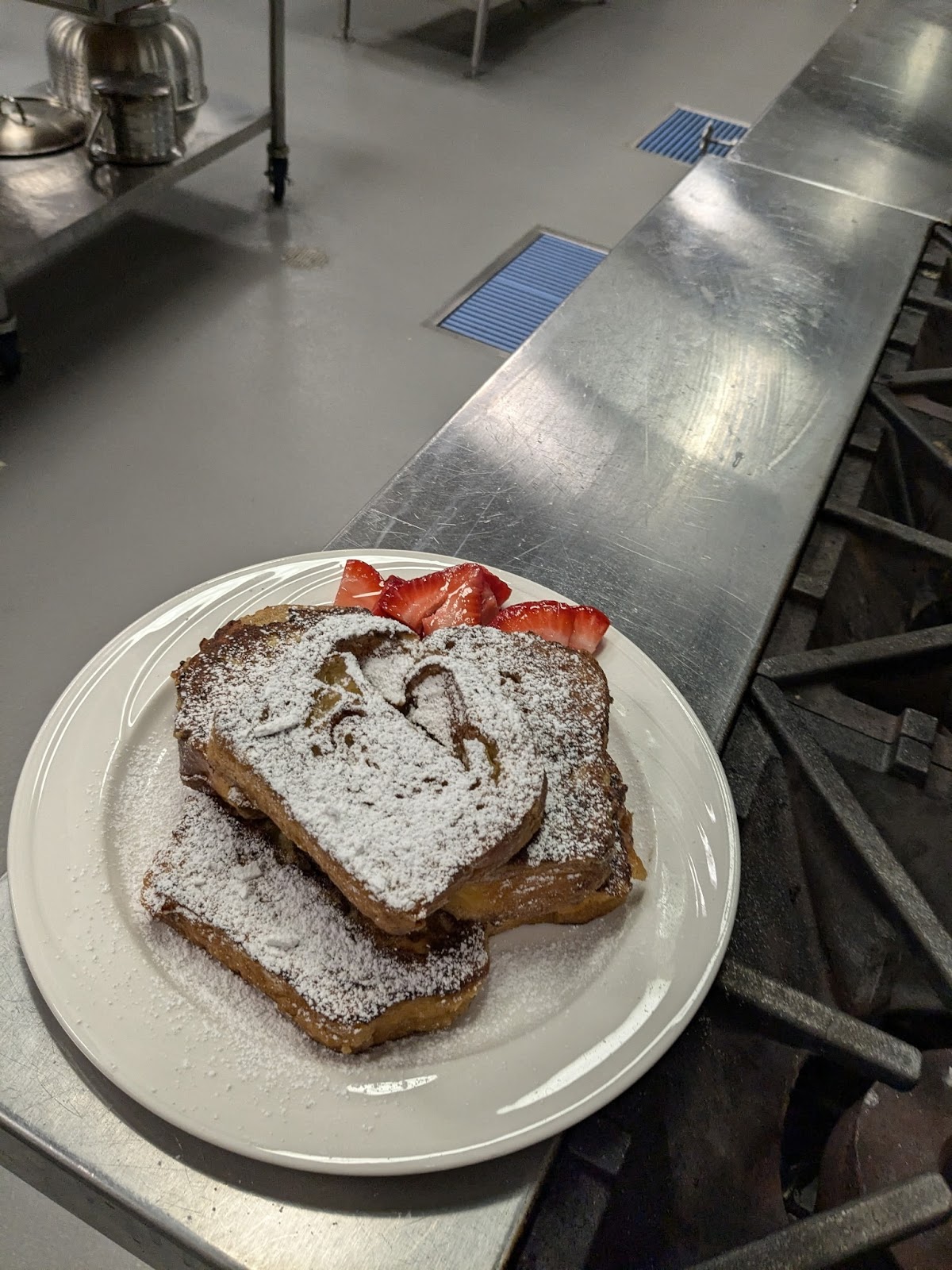
   When thinking about religious reasons for kitchen rituals, it occurred to me that professional kitchens have many rituals as well, a lot of them strikingly similar to religious ones. For this blog post, I talked to my sister who has worked in professional kitchens to make sure I was getting things right. In exchange, she asked that I show off the food she’s made, so all the pictures are of stuff she’s cooked/baked.       One way professional kitchens have rituals is the use of certain language that is specific to the kitchen setting. This separates the kitchen from outside of it, making its own little environment with customs only those within it participate in. For example, there are specific words that must be used to indicate potential safety risks when carrying something around the kitchen. For example, when walking behind somebody it is important to call out “behind” and when holding something sharp one must call out “sharp”. Failure to call out th...

Sound and the Power of Live Performance

Image
     When Maria Ulfah recites the Qur’an, part of what makes her recitation so impressive is the technique she is able to use during a live performance. I don't understand Arabic nor do I understand the techniques she is using, but what I can tell from watching a video of her recitation is that she has an amazing amount of control over her voice.      One aspect of live performance, and in this case specifically music performance, that makes it so special is that the performer only has one chance to get it right. A studio recording of a song can be incredible, but part of the reason seeing/hearing it live is better than listening to a recording is the talent that is showcased by the performer.      The other reason live performance is more impactful than a recording is that going to a performance gives the opportunity to connect with other people. I would guess that hearing Maria Ulfah recite the Qur’an with a friend or family member is more ...

Darsan, Idols, and Portraits

Image
Unlike Abrahamic religions, Hinduism does not view idol worship as a sin. In fact, idols are an important part of Hindu traditions. Many Hindus feel like their gods can see them through the idols and in turn while they look at the idols they are looking at the gods. The act of seeing a deity (through an idol) and being seen in return is called Darsan. Darsan promotes connection between people and the divine. This reminds me of the way looking at portraits or statues of people throughout history often feels, as it allows the person viewing the artwork to connect with a person that lived centuries ago. I think a good example of this that I personally connect with are the Fayum mummy portraits. These portraits, painted on wood, adorn the tombs of upper class Romans in Egypt and depict the deceased person. These portraits likely date to the early 1st century AD, and are therefore the faces of people who lived two thousand years ago. When I look at these portraits, knowing they depict a rea...

The 6th Sense and the Mandela Effect

Image
In Authors of the Impossible by Jeffrey Kripal, he discusses magnetism as a 6th sense. Part of magnetism is the idea of a collective memory telepathically shared between people. While this could occur between two people, I think it is more interesting to consider a collective memory across a larger group. If my friend and I both text each other the same meme, that could easily be coincidence and because we like the same things. It’s much less likely to be a coincidence when the 6th sense experience is shared by thousands of people. The Mandela effect immediately sprang to mind. The phenomenon of a large group of people misremembering events, images, names, etc. incorrectly could be an example of a collective memory. False memories are common, people misremember things all the time. What is potentially paranormal here is the collective false memory, where everyone misremembers in the same way. The Mandela effect is named after Nelson Mandela, who many people believed died in prison in t...

Sacred Pain and the Phenomenal Self: Intentional Pain and Pain Stims

Image
In Sacred Pain and the Phenomenal Self by Ariel Glucklich many different reasons for intentionally inflicting pain are discussed. The one that stood out to me the most was pain as medicine.  When pain is medicine, it is the solution to a problem. Many neurodivergent individuals, especially those with autism, use pain as a way to self regulate. This is often called “pain stimming” and is common enough that many people see it as a stereotype of autism. For example, many people think all autistic people hit themselves. While this does happen, this is not how it always presents. As an autistic person I find pain stims very useful for self regulation because they are usually a lot more subtle than vocal stims, for example, and therefore can be utilized for self regulation in public more often. I personally have a little plastic turtle that has some spikes in it that I use to stim. I think there is a lot of misunderstanding about pain stimming that paints it as inherently dangerous self-...